
Automation and Special Production Equipment
Special equipment, fixtures and robotic cells designed around your own production process: from the study to construction and integration in the line.
The right automation is a solution, not a machine.
Standard automation, such as palletising, is bought almost off the shelf. Most production problems of an SME are not standard: a process that grew over the years, older machines that must keep working, parts that change, a budget that has to pay back.
We study the whole process first, not only the station we were asked about, and we look for the targeted intervention that pays back, using the existing equipment where it can stay. Our agreements are judged by the result, not by the delivery of equipment.
What we take on
- Special automation
- Fixtures and tools
- Robotic cells
- Assembly lines
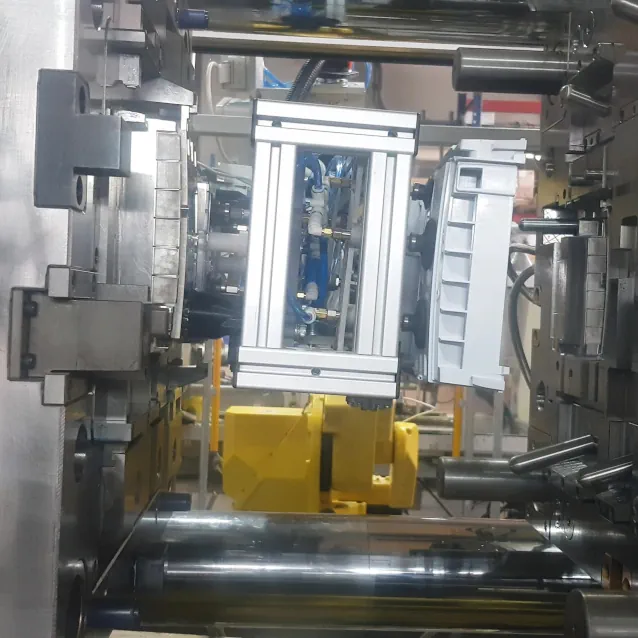
- Loading and unloading injection machines
- Special inspection machines
- PLC / HMI
- Integration with existing machines
Including the mechanical design and construction of the special mechanical parts.
Where we fit
Non-standard projects that need an original study and engineering. For a standard, catalogue automation, a specialised supplier is usually the better choice.
Automating the process you actually have.
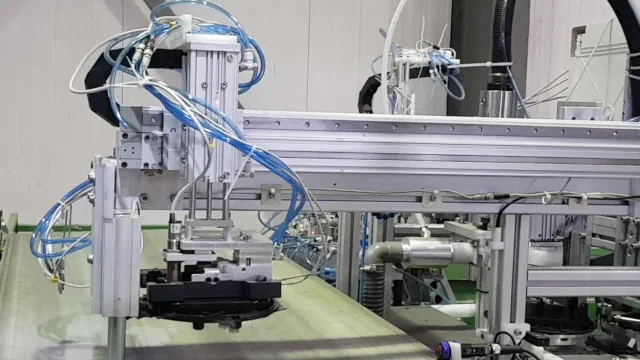
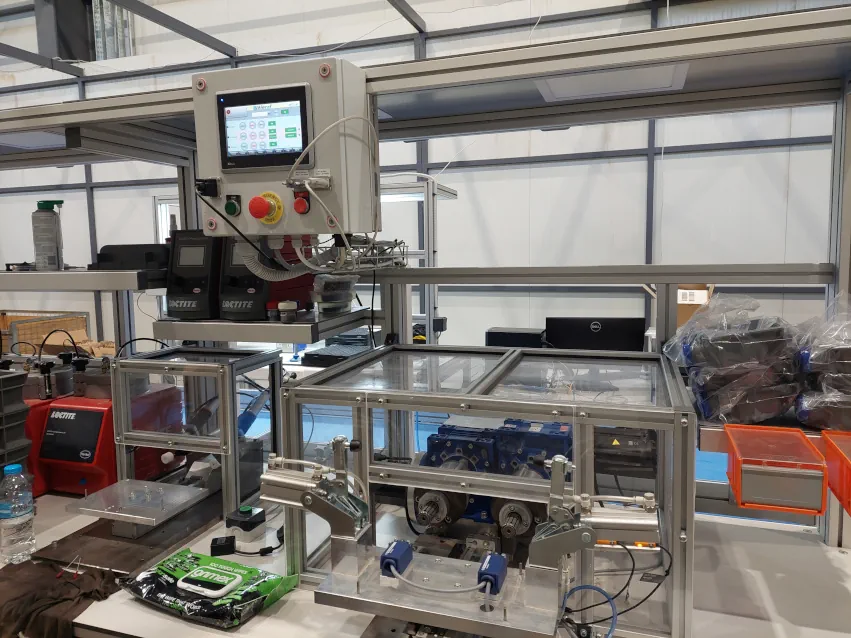
Turning a manual process into an automated station or line takes mechanical design, controls and a clear view of the process itself. We build machines around processes such as:
- Pick and place
- Screwing with torque control and monitoring
- Glue and sealant dispensing
- Torque and leak testing
- Ultrasonic welding
- Trimming and machining
- Loading and unloading moulding machines
- Inspection and calibration
Control through PLCs, embedded PCs, programmable HMIs and robot controllers, and connection to databases for traceability.
Video: a custom automation
A robotic cell is a solution, not a set of equipment.
A typical cell includes:
- The robot arm. We prefer FANUC robots.
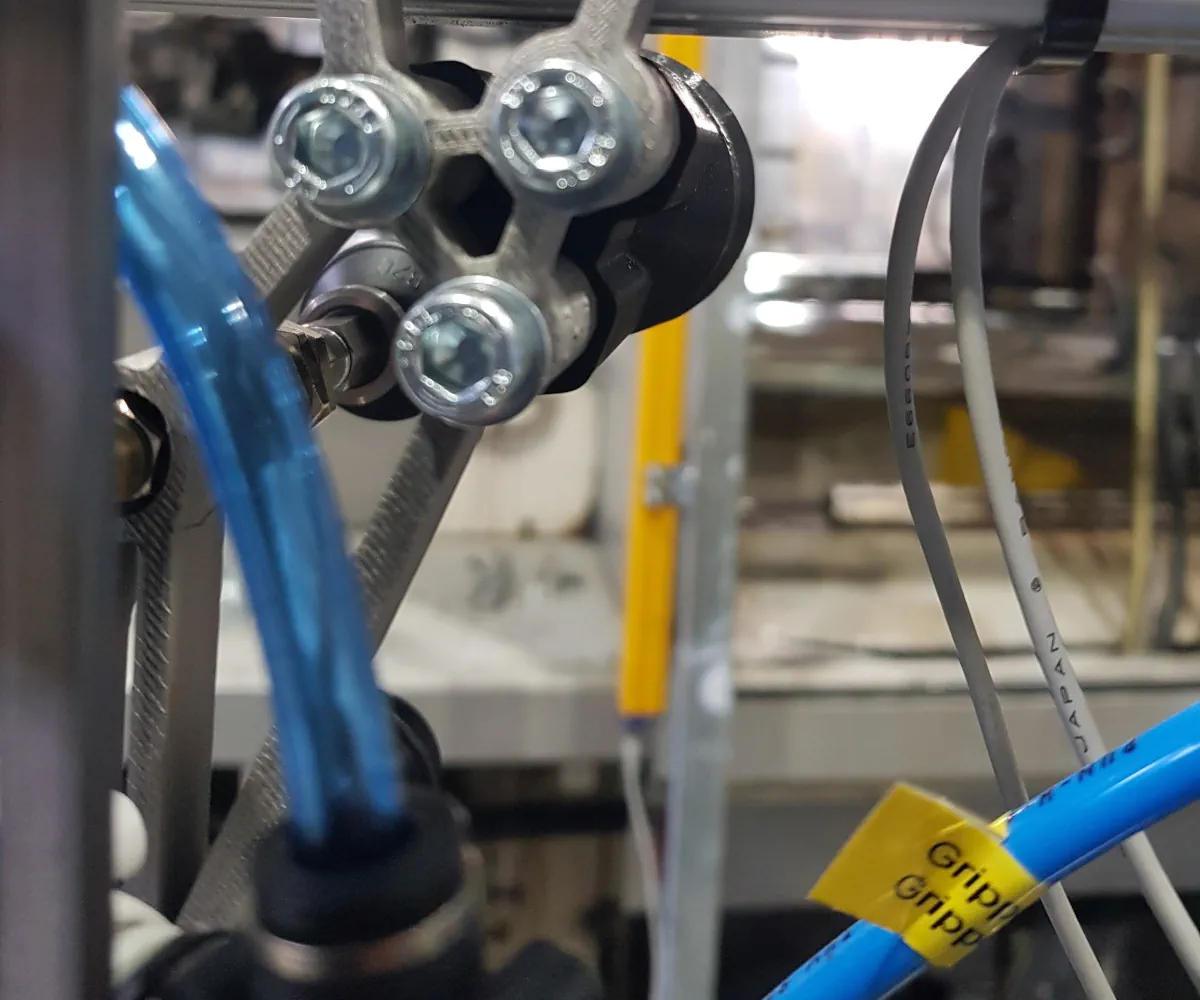
- End-of-arm tooling. Designed and built, often with printed parts.
- Cell control. A central PLC, typically Beckhoff TwinCAT, coordinating all devices, with a touch-screen interface.
- Safety. Designed to the applicable safety requirements, through the robot controller or certified safety equipment.
- Existing machinery. The minimum upgrade needed to bring traditional machines into the cell.
- Custom and auxiliary equipment. Built by us or integrated from other suppliers, such as vibratory feeders.
The fixture decides the quality of the operation.
Assembly, clamping, test and inspection fixtures, grippers and small special machines, designed for repeatability and built to last in production.
- Welded frames with CNC-machined aluminium and steel components
- Printed parts with metal inserts where they are the better solution
- Structural checks by FEA where loads or stiffness matter
- Sensors and interlocks so the fixture confirms the part is right
From the process on the floor to equipment in the line.
-
Study of the process
The whole process, its cycle times, its bottlenecks and its future: what will connect to it later.
-
Concept and investment
The solution, what it costs to build and run, and how it pays back.
-
Design
Mechanical design, controls and safety, with the special parts designed for manufacture.
-
Construction and testing
Built, programmed and tested before it reaches your floor.
-
Integration and start-up
Installed in the line, connected to the existing machines, and running with your people.
Real projects.
A robotic overmoulding cell
Do you have a production process you want to automate?
Describe the process as it runs today: the parts, the operations, the cycle time and the people involved. A short video from the floor often says more than a specification.